
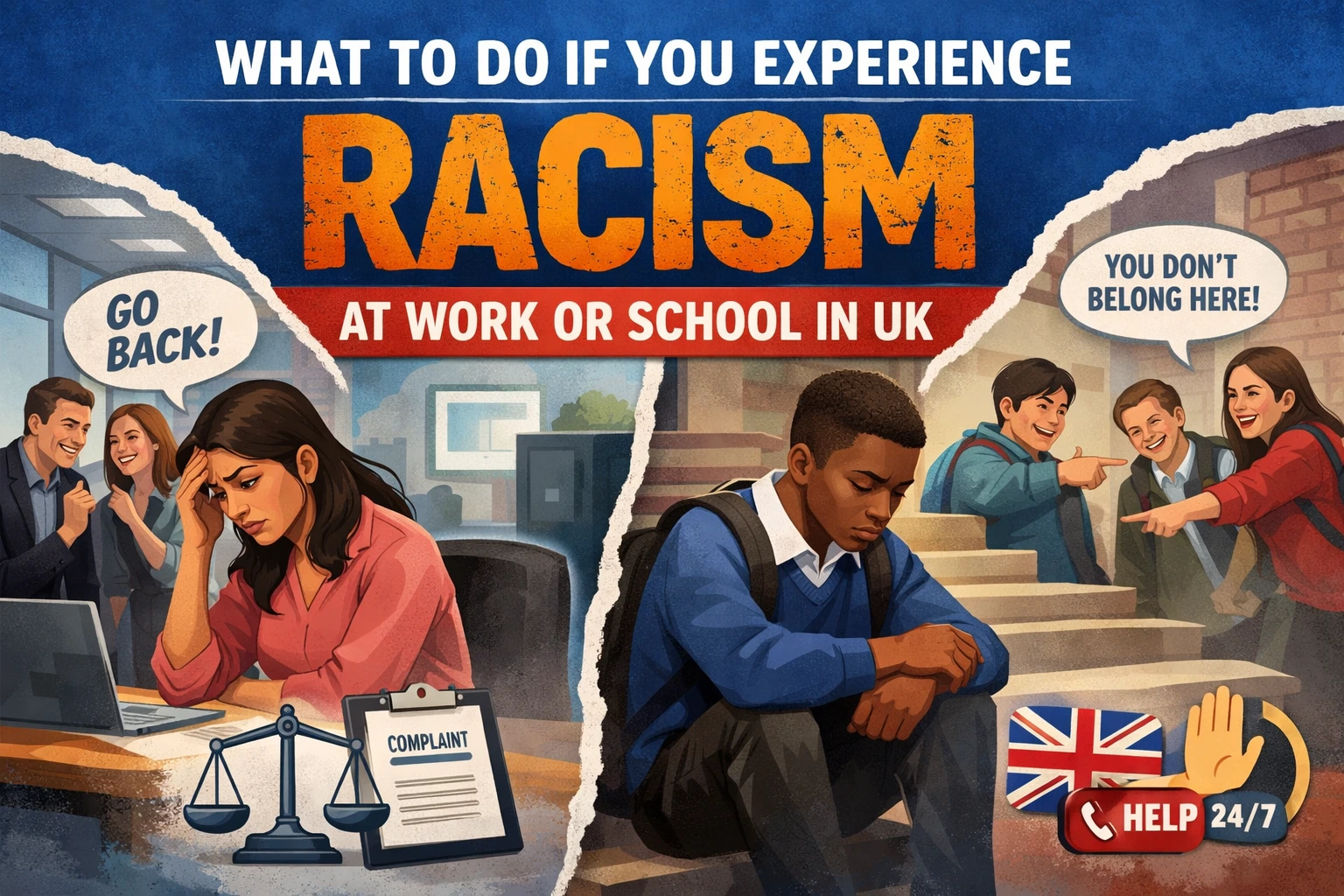
Are you dealing with racism at work or school? It can be upsetting, confusing, and deeply unfair. No one should feel unsafe, ignored, or treated differently because of their race, colour, nationality, or ethnic background. If you have experienced racism at work or racism at school, it is important to know you are not overreacting and you are not alone. Support, legal protections, and UK policies on racial equality exist, and there are clear steps you can take to protect yourself.
This guide explains how to report racism at work, navigate the workplace racism grievance procedure, and take action if you face racism in school. You will also learn about anti-racism initiatives in UK schools, your legal rights, immediate actions, and where to find emotional support. By understanding the difference between prejudice and discrimination, including direct discrimination, indirect discrimination, harassment, and victimisation, you can confidently take practical steps to stay safe and ensure your concerns are addressed.
What Counts as Racism? Clear Definitions With Examples:
Racism can be obvious, but it can also be subtle and built into systems. You must understand its different forms so you can recognise when behaviour is unacceptable or unlawful.
1- Overt Racism:
This includes racial slurs, threats, or openly hostile comments about someone’s race or nationality. Denying a person a promotion, training opportunity or school activity because of their ethnic background is also clear discrimination. Segregating individuals or treating them differently in visible ways falls into this category.
2- Subtle or Covert Racism:
Not all racism is loud. Microaggressions, repeated “jokes” about stereotypes, exclusion from meetings or study groups, and biased performance reviews can all signal discrimination. Tokenism, where someone is included only to appear diverse but not given equal voice, is another example.
3- Structural or Institutional Racism:
Patterns such as unequal discipline in schools, promotion disparities, or uneven enforcement of rules may indicate systemic bias. Anti-racism initiatives in UK schools aim to reduce these issues.
4- Legal Definition:
Under discrimination and equality law, racial discrimination includes hostile environments, less favourable treatment, unfair impact of policies, and retaliation after complaints, including racially discriminatory behaviour in the UK workplace, which is unlawful under the Equality Act 2010.
What To Do Immediately After It Happens:
If you experience racism at work or racism at school, first check your immediate safety. If there is aggression or threatening behaviour, remove yourself from the situation. Your wellbeing comes first. Even when racial harassment involves words or exclusion rather than physical harm, it can still feel overwhelming. Take time to breathe before responding. If you feel unsafe due to racial discrimination, inform a trusted colleague, manager, HR department, teacher, or safeguarding lead. Reporting early can help address workplace racism and prevent further incidents.
Decide Whether to Respond in the Moment:
Once you feel steady after experiencing racism at work or racism at school, consider whether it is safe to respond immediately. In some situations, calmly addressing racial harassment can help set a clear boundary. You might say, “That comment is inappropriate,” or “I feel uncomfortable with that remark.” Short, direct responses can challenge discriminatory behaviour. However, power dynamics matter. If the incident involves a manager, teacher, or authority figure, document the racial discrimination and follow the formal reporting procedure later to protect yourself.
Write Down Everything:
Accurate records are important if you later decide to raise a complaint.
Documentation Checklist:
- Date of the incident
- Time it occurred
- Location
- Names of people involved
- Names of any witnesses
- Exact words or actions, written as clearly as possible
- How the incident affected you
- Copies of emails, messages or letters
- Screenshots of digital content, including social media posts
Write your notes as soon as possible while details are fresh in your mind. Keep them stored safely, ideally outside your work or school system if appropriate. Good documentation can make a significant difference if the matter is formally reviewed.
Easy Steps to Document Racism Properly:
Proper documentation is one of the most important steps to take after experiencing racism in school or the workplace. Well-kept records help you present a clear account if you report the incident and protect you in case of retaliation.
1- Keep a Contemporaneous Log:
Record each incident as soon as possible while details are fresh. Timing matters because memories fade, and precise notes make your account more credible. Keeping a detailed log is one of the essential steps to take after experiencing racism in school, especially in cases involving subtle or ongoing discrimination.
2- Save Emails, Messages, and Performance Reviews:
Keep copies of any written communication that contains discriminatory language or unfair treatment, including emails, texts, memos, and performance reviews. Screenshots of online messages or social media interactions can also serve as evidence.
3- Witness Statements:
If someone saw or heard the incident, ask them to document what they observed. Witness accounts strengthen your case and support the formal reporting process.
4- Recording Laws:
Recording conversations can provide evidence, but always check UK legal guidelines first. Covert recording may be restricted, so understanding the law is critical.
5- Organise Evidence Chronologically:
Arrange logs, emails, messages, and witness statements by date. Clear organisation shows patterns of behaviour, which is vital in grievance procedures and forms part of the key steps to take after experiencing racism in school.
Keeping thorough, organised documentation strengthens your position and ensures you are prepared if you choose to report the incident formally.
What to Do If You Experience Racism at Work:
In the UK, anti-discrimination laws protect employees from racial discrimination, harassment, and victimisation. You are entitled to a workplace free from hostility, and raising a concern cannot legally result in punishment or dismissal. Hostile work environment protections mean repeated inappropriate behaviour or systemic bias can be challenged under the law. Similarly, there are resources and guidance available to provide help for students experiencing racism, ensuring that pupils and students can report incidents and access support safely.
Report the Racism:
If you decide to report racism at work, follow a clear path:
- Supervisor: Raise the issue with your manager if safe and appropriate.
- HR: Human Resources can investigate and mediate complaints.
- Ethics hotline: Some organisations offer anonymous reporting channels.
- Written complaint: Include dates, times, locations, witnesses, and exact wording.
Sample structure for a complaint:
- Brief description of incident(s)
- Evidence or supporting documents
- Names of witnesses
- Impact on your work or wellbeing
- Desired outcome or resolution
What to Do If HR Does Nothing?
If your complaint is ignored or mishandled, you can escalate to higher management or external bodies. In the UK, the Advisory, Conciliation and Arbitration Service (ACAS) offers guidance, and legal consultation may be needed for persistent issues. Government agencies can also provide formal avenues for discrimination claims.
What Retaliation Looks Like:
Retaliation can take many forms, including sudden poor performance reviews, exclusion from projects or meetings, demotion, or termination. Any negative change following a complaint should be noted and can support your case under UK anti-discrimination laws.
How to Protect Yourself From Retaliation:
- Keep detailed records of all interactions after reporting.
- Continue documenting any unfair treatment or changes in your role.
- Maintain professional communication at all times.
- Seek support from colleagues, trade unions, or legal advisors.
- Understand internal escalation paths and external legal protections.
What to Do If You Experience Racism at School or College in the UK?
Students in the UK are protected from racial discrimination under anti-discrimination legislation and equality policies. Schools must provide a safe and inclusive environment, free from harassment or victimisation. Anti-bullying policies also cover racial harassment, ensuring pupils are not unfairly targeted. Understanding your rights helps students recognise when behaviour crosses the line, take action, and access help for students experiencing racism when needed.
Reporting Steps in School:
If you experience racism at school or college, there are clear steps to follow:
- Teacher: Report the incident to a trusted teacher or tutor.
- Principal or Headteacher: Escalate if the issue persists or is serious.
- School district or local authority: They can intervene if internal processes fail.
- University DEI office: For higher education, diversity, equity, and inclusion offices handle complaints and investigations.
- Ombudsman: Some institutions provide independent review of unresolved complaints.
For Parents: How to Advocate for Your Child:
Parents play a key role in supporting students experiencing racism.
- Documentation: Keep detailed records of incidents, including dates, times, witnesses, and communications.
- Written communication: Use formal letters or emails to ensure there is a clear record of concerns.
- Escalation path: Know the chain of authority within the school and local education authorities to pursue complaints effectively.
Good parental advocacy is necessary to ensure the child receives fair treatment and that the school addresses the problem quickly.
Should You Confront the Racist?
Deciding whether to confront someone who has acted in a racist way requires careful consideration. Safety and context should always come first.
When confrontation is safe:
If the situation is calm and the person is unlikely to respond aggressively, a brief, direct response can set a boundary. This is more feasible in peer-level interactions or among colleagues who are approachable.
When it’s not safe:
Avoid confronting someone if there is a risk of escalation, physical threat, or if the individual holds significant authority over you. In workplaces or schools, confronting a manager, teacher, or senior official can sometimes worsen your position.
When to Consider Legal Action Against Racist:
- Severity threshold: Take legal action if the racism is serious, persistent, or has caused significant harm to your work, studies, or wellbeing. Isolated incidents may be addressed internally.
- Pattern of behaviour: Repeated discriminatory treatment, such as ongoing exclusion, biased evaluations, or harassment, strengthens a potential claim.
- Retaliation evidence: Negative consequences after reporting, like demotion, exclusion, or unfair treatment, support a claim of victimisation or unlawful retaliation.
- Consultation vs. lawsuit: Begin with legal consultation or mediation to understand your rights. A lawsuit should be considered only as a last resort.
- Time limits: UK discrimination claims have strict time limits (statutes of limitation). Check local guidance to make sure your claim is valid.
Red Flags That It’s Time to Leave:
Sometimes, despite your best efforts, the environment may remain unsafe or unresponsive. Recognising the warning signs early can help protect your wellbeing and career or education.
- Toxic leadership: Leaders who dismiss concerns, tolerate racist behaviour, or actively contribute to discrimination can make meaningful change impossible.
- Repeated ignored complaints: If reports of racism at work or racism at school are consistently overlooked, it signals that the institution may not take your concerns seriously.
- Retaliation escalation: Any negative consequences, such as demotion, exclusion, or unfair evaluations, following a complaint are serious red flags.
- Emotional toll outweighing safety: Persistent stress, anxiety, or fear caused by the environment indicates that your wellbeing is at risk.
Leaving a harmful environment is a difficult decision, but recognising these red flags early can help you prioritise your health and long-term prospects. Documenting your experiences before leaving ensures you still have evidence if you choose to escalate externally or pursue legal action later.
Take Action Against Racism
You deserve respect, safety, and fairness, always. Document carefully, know your rights, and seek support when needed. Every step you take not only protects you but also helps create a more inclusive environment for everyone.
Are you ready to use your voice to challenge racism where you are?
FAQ’s
What counts as racism at work under UK law?
Racism at work includes direct discrimination, indirect discrimination, harassment, and victimisation based on race, ethnicity, nationality, or background, all of which are unlawful under the Equality Act 2010.
How do I report racism at work in the UK?
Start by documenting incidents, then follow your employer’s grievance or anti-discrimination reporting procedure. If unresolved, you may seek ACAS early conciliation or an Employment Tribunal claim
What should I do if I experience racism at school?
Speak to a teacher, safeguarding lead, or school senior staff, keep records of incidents, and escalate through the school’s formal complaint process if needed
Can I get legal help for workplace racism?
Yes, you can access legal advice from trade unions, solicitors specialising in employment law, or organisations like Citizens Advice to understand your rights and next steps
Are there support services for students and employees facing racism?
NHS counselling, student wellbeing services, workplace Employee Assistance Programmes (EAP), and UK race equality organisations provide support for emotional and practical needs.