
Bullying continues to affect children and young people across the UK in classrooms, playgrounds, and increasingly online. The impact of bullying on young people can be long-lasting, influencing confidence, mental health, academic progress, and their sense of belonging. From hurtful comments about appearance to discrimination linked to skin colour or background, many pupils still face challenges that undermine their self-worth. That is why open conversations about diversity, respect and inclusion remain essential in every school and community.
Through carefully designed anti-bullying workshops and engaging primary school anti-bullying activities, schools can take proactive steps towards creating safer, more inclusive environments. By addressing racism through school workshops and promoting acceptance regardless of differences, these programmes empower pupils to stand up for themselves and others. If you are passionate about building respectful school cultures and supporting young people to thrive, connect with us through our blog and join the movement towards positive change.
What is bullying?
Bullying takes many forms in British schools, including physical actions, hurtful words, social exclusion, and online harassment. The impact of bullying on young people goes beyond playground conflicts, affecting confidence, friendships, attendance, and even academic performance. Children who experience repeated bullying may struggle with anxiety, depression, or withdrawal. Studies show the mental health impact of bullying in British schools is significant, with a notable number of pupils reporting stress, low self-esteem, and emotional distress. Identity-related bullying, including issues linked to race, skin colour, gender, or sexuality, continues to affect many students, highlighting the need for supportive and inclusive school environments.
What Are Anti-Bullying Workshops?
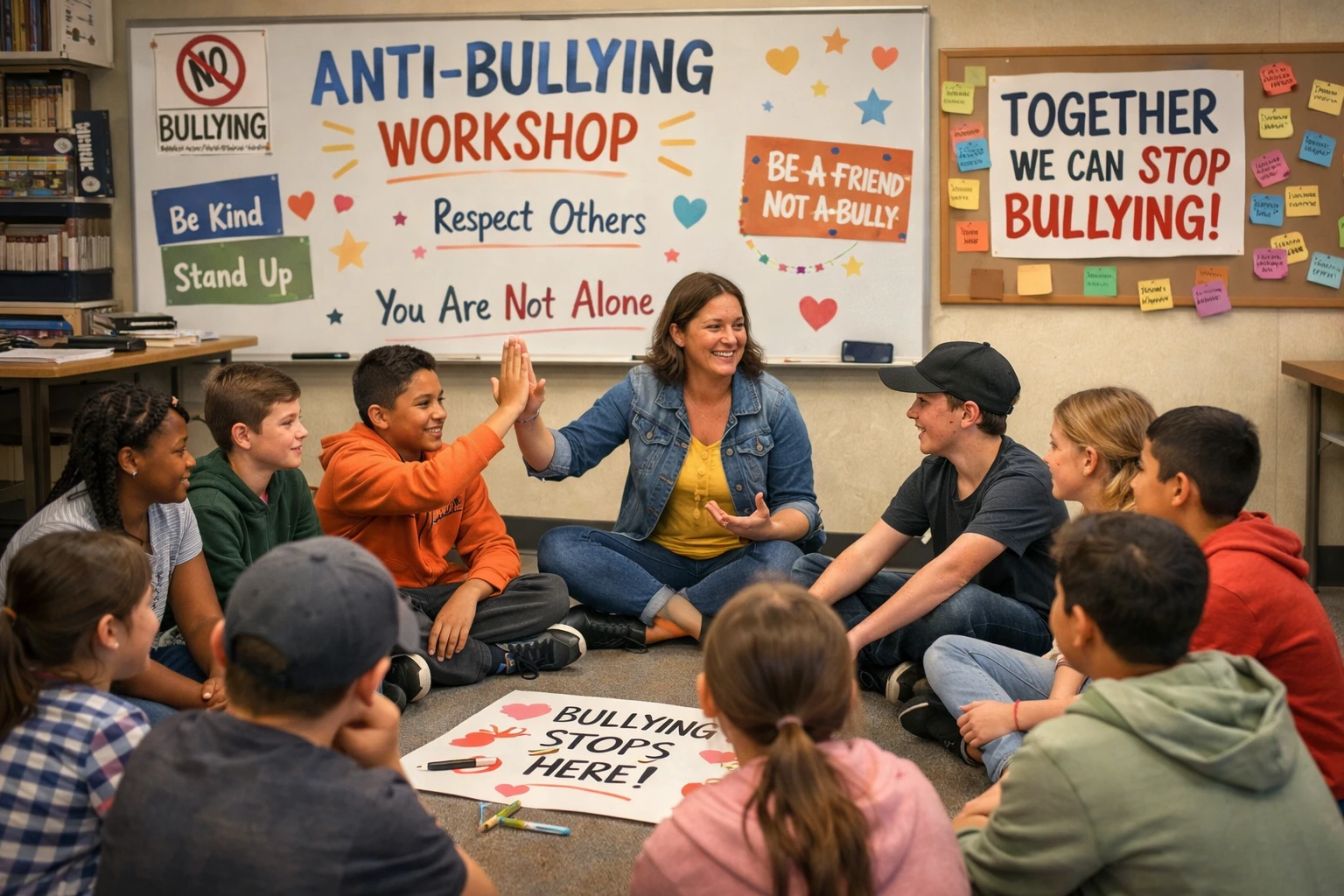
Anti-bullying workshops help young people understand, prevent, and respond to bullying in schools and communities. These workshops use interactive sessions, role-plays, and group discussions to make learning engaging and practical. They focus on building confidence, empathy, and problem-solving skills, helping children cope with the impact of bullying on young people and reducing the mental health impact of bullying in British schools.
Types of Anti-Bullying Workshops:
- School programmes: Age-appropriate activities, including primary school anti-bullying activities, that teach respect and teamwork.
- Community youth workshops: sessions outside school that support social skills and peer relationships.
- Parent & teacher training: Guidance on spotting signs of bullying and fostering supportive environments.
- Online safety & cyberbullying sessions: Practical advice on safe internet use and managing digital bullying.
These workshops go beyond passive assemblies or talks. They create a dynamic, participative environment where students actively learn to stand up for themselves and others while addressing racism through school workshops and promoting inclusion for all.
Core Objectives of Anti-Bullying Workshops
Anti-bullying education equips young people with the knowledge and skills to recognise harmful behaviour and support each other. These workshops help children, parents, and teachers understand warning signs and take positive action. They also connect with wider initiatives like Anti-Bullying Week UK 2026, reinforcing school and community efforts.
Key Objectives:
- Recognise different kinds of bullying behaviour and language, helping adults and pupils identify signs your child is being bullied.
- Teach effective reporting and coping strategies so children feel safe and supported.
- Build empathy, respect, and understanding among pupils to create inclusive school environments.
- Encourage bystander intervention, empowering peers to act responsibly and prevent bullying.
- Support the role of teachers in preventing bullying in the UK, providing tools to maintain a safe and positive learning space.
Confidence and Self-Worth:
Workshops help young people face fears and overcome feelings of shame, giving them the courage to express themselves. Positive messages about acceptance and inclusion, especially regarding race or skin colour, help children feel valued and respected in their school community. This confidence encourages them to engage more openly with classmates and take part in activities without worry.
Emotional Resilience and Mental Health:
By discussing challenges and practising coping strategies, workshops reduce feelings of anxiety and sadness linked to bullying. Children learn how to handle difficult situations calmly and build strength to face setbacks, improving their overall emotional well-being and ability to focus in school.
Identity and Belonging:
Workshops explore issues like prejudice, stereotypes, and social pressures, helping pupils understand and respect differences. Activities promote cultural sensitivity and empathy, so young people feel included and connected. These sessions encourage children to appreciate their own identity while respecting others, creating a supportive and welcoming environment in schools.
Social & Behavioural Impact:
Anti-bullying workshops help children develop stronger social skills and understand how their actions affect others. By practising teamwork, empathy, and respectful behaviour, pupils create a positive school environment where everyone feels safe and included. These sessions also teach practical tools to manage online spaces and reduce harmful behaviour.
Key Social and Behavioural Benefits:
- Better Peer Relationships : Encourages collaboration, kindness, and support among classmates, promoting a culture celebrated during Kindness Day UK.
- Reduced Bullying Incidents : Pupils apply strategies from workshops to prevent conflicts and respond effectively, lowering negative behaviour.
- Digital World & Cyberbullying: Provides guidance on online safety, reporting inappropriate content, and supporting peers in digital spaces.
Evidence: Research and Results
Research shows that primary school anti-bullying activities and interactive workshops significantly improve the school environment and reduce bullying incidents. Studies report that pupils feel safer, more included, and more confident to speak up, helping lower the mental health impact of bullying in British schools. Programmes like the ES Award provide measurable results, highlighting positive behaviour changes and stronger peer support. Workshops that focus on respect and diversity also play a crucial role in addressing racism through school workshops, ensuring all children feel valued and supported.
What Makes a Great Anti-Bullying Workshop?
A strong workshop engages pupils with interactive, youth-led activities such as role plays, drama, and real-life discussions, helping them understand and practise positive behaviour. It includes inclusive content, covering differences in race, gender, appearance, sexuality, and ability, so every child feels respected. Great programmes also provide continuous support through follow-up mentoring and long-term initiatives that build a lasting culture of kindness and respect
How Schools and Communities Can Implement These Workshops:
- Assess the current school climate : understand challenges and needs to plan effective anti-bullying education.
- Choose relevant workshops : Select programmes that suit age groups, including primary school anti-bullying activities.
- Involve parents and students : Encourage participation to strengthen learning and support networks.
- Regular follow-ups and evaluations : Track progress and adapt strategies, linking activities to anti-bullying campaigns in UK schools and events like Anti-Bullying Week UK 2026.
Beyond the Workshop: Building a Bully-Free Culture:
Schools can create lasting change by combining clear anti-bullying policies, youth ambassador programmes, and peer support networks. Mentorship encourages pupils to support each other, while lessons in digital citizenship and online safety equip children to handle challenges in the virtual world. Together, these strategies build a positive, respectful school environment where students feel safe, confident, and included, helping to reduce harmful behaviour and foster a culture that discourages bullying at every level.
Addressing Cultural Sensitivity & Identity:
- Recognise the signs your child is being bullied, including prejudice related to race, skin colour, or culture.
- Equip pupils to respect diverse identities through discussions, workshops, and activities.
- Support the role of teachers in preventing bullying in the UK by promoting understanding and inclusion across all ethnicities and backgrounds.
- Encourage open conversations about differences to strengthen empathy and belonging in schools.
Wrapping up:
Anti-bullying workshops do more than teach rules or awareness. They shape young lives by boosting confidence, improving relationships, and supporting emotional and social growth. Pupils learn how to handle challenges, feel valued, and take an active role in creating safer, more inclusive schools. The benefits extend beyond the classroom, helping children succeed academically and socially.
You can make a difference by supporting these programmes in your local schools. Share experiences, encourage participation, and promote a culture where every child feels accepted and respected. Connect with our blog to learn more about fostering inclusivity and helping young people thrive.
How long do anti-bullying workshops take?
Most workshops last between one and three hours, depending on the age group and content. Some schools run shorter sessions over several days, especially for primary school anti-bullying activities, allowing pupils to practise skills gradually and retain learning effectively.
Do these workshops really work?
Yes. Research shows that interactive workshops improve pupils’ confidence, reduce bullying incidents, and strengthen peer support. They also create a more inclusive school environment where children feel safer and respected.
Can workshops help victims of cyberbullying?
Absolutely. Workshops teach online safety, how to report harmful content, and how peers can support each other. Children gain strategies to manage digital challenges while learning to communicate safely online.
What should parents do after a workshop?
Parents should continue discussions at home, reinforce coping strategies, and stay involved with teachers. Supporting children in practising empathy and problem-solving strengthens the benefits of the workshop.
How to choose the right anti-bullying programme?
Look for workshops tailored to your child’s age that include interactive sessions and address local school needs. Programmes that cover both online and offline bullying and emphasise respect and inclusion are the most effective.
Are anti-bullying workshops suitable for primary and secondary students?
Yes. Content is adapted to suit different age groups. Primary school anti-bullying activities often focus on empathy and friendship, while older students explore peer pressure, social media, and identity-related challenges.
How can teachers integrate workshop lessons into daily school life?
Teachers can reinforce lessons through class discussions, group activities, and role-playing scenarios. Incorporating anti-bullying themes into assemblies, projects, and pastoral sessions keeps the learning consistent.
Can anti-bullying workshops support children with special educational needs?
Yes. Workshops can be adapted to meet different learning abilities, ensuring every child benefits. Interactive methods, small group discussions, and visual aids help children engage and understand key messages.
What role do peers play in anti-bullying programmes?
Peers act as allies, supporting each other, modelling positive behaviour, and intervening when they see bullying. Programmes often train pupils to become mentors or ambassadors, creating a culture where children feel empowered to help each other.